How to Choose the Location of a Cooling Tower ?
Cooling towers play a critical role in many applications, from industrial facilities to HVAC systems. However, the efficient operation of a cooling tower depends not only on selecting the correct capacity but also on choosing the right installation location. An incorrectly positioned cooling tower can lead to reduced performance, higher energy consumption, and maintenance problems.
For this reason, the installation location of the cooling tower should be carefully evaluated during the project planning phase.
Cooling towers use ambient air to cool circulating water. Therefore, the tower must be installed in an area where clean and unrestricted airflow is available.
Key considerations include:
There should be no walls or structures blocking the air inlet
Recirculation of exhaust air back into the tower must be prevented
Installation in enclosed spaces is not recommended
At least 2–3 meters of open space should be available around air inlet areas
Insufficient airflow can significantly reduce the cooling tower’s performance.
Cooling towers discharge warm and humid air during operation. If this air re-enters the tower, the cooling efficiency decreases significantly.
To prevent this:
Exhaust air should be directed away from the air intake
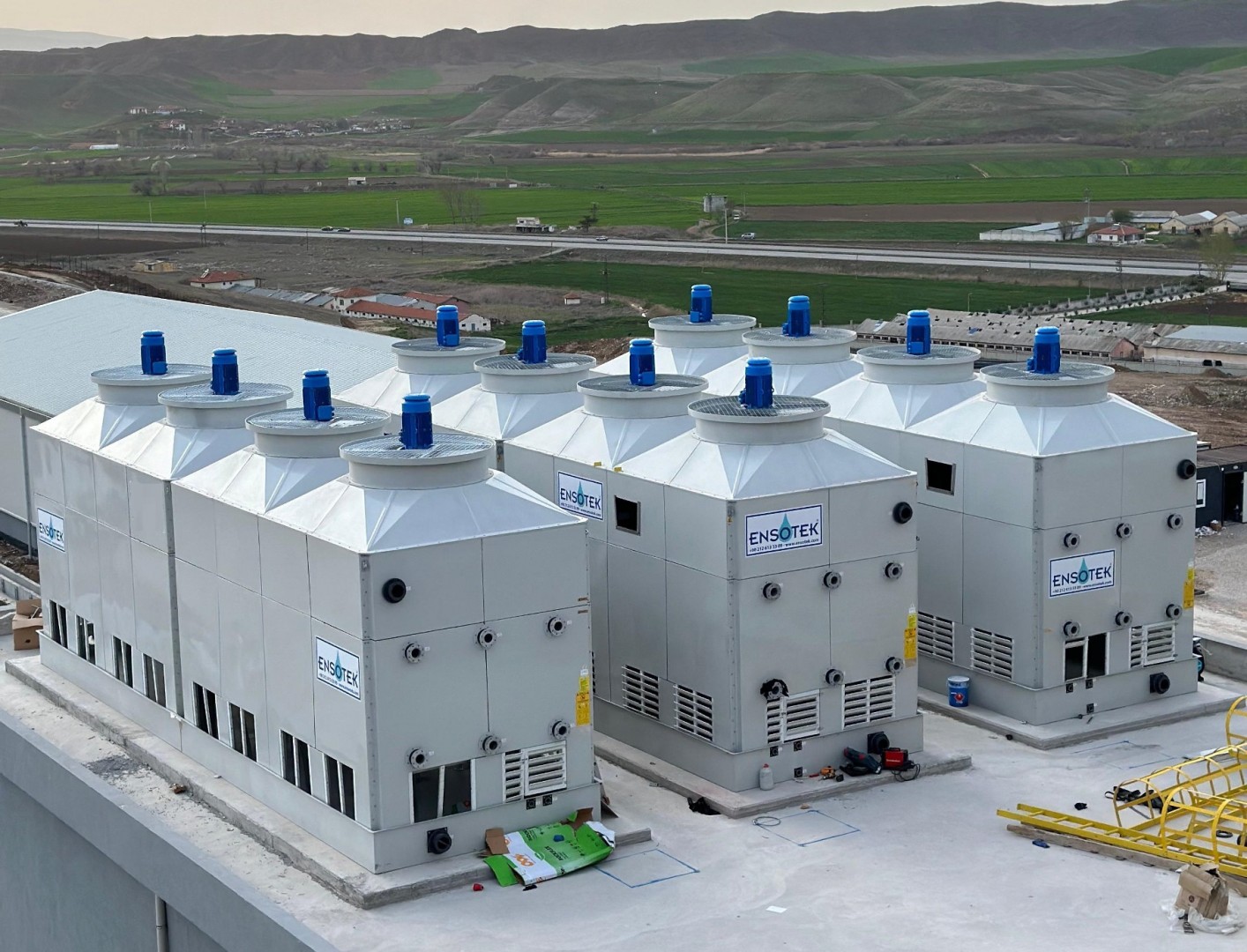
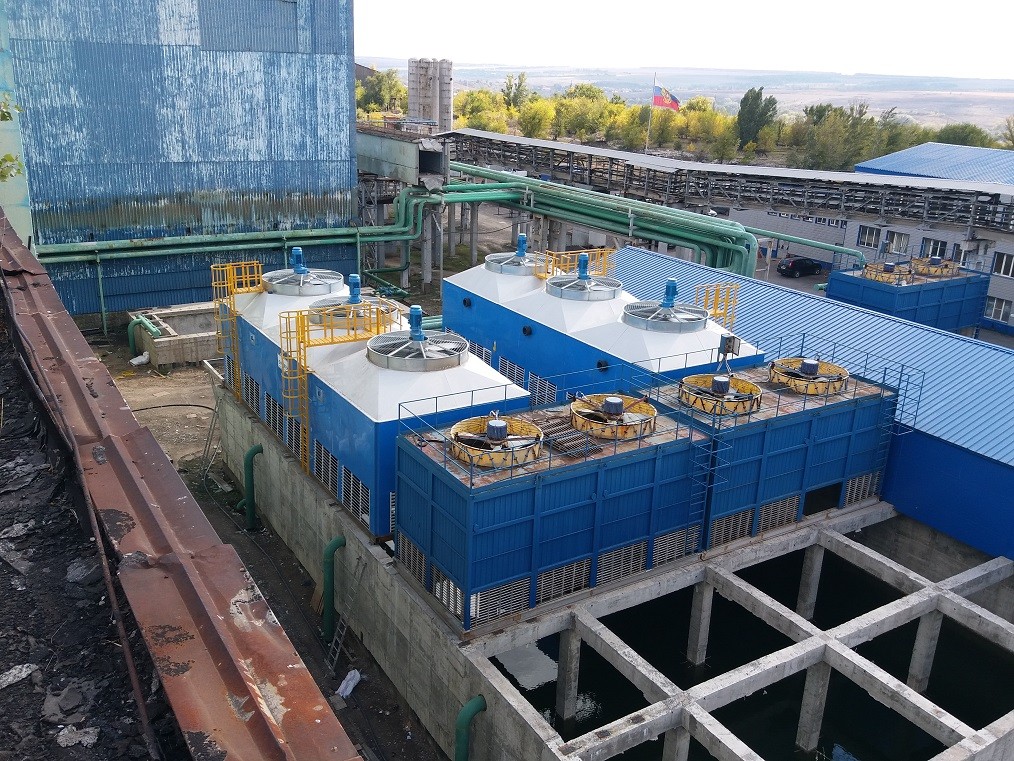
Proper spacing should be maintained between multiple towers
Installation near high walls or enclosed corners should be avoided
This issue is particularly important in rooftop installations.
The prevailing wind direction should be considered when selecting the tower location.
For optimal performance:
Wind should not carry the exhaust air back toward the tower
The tower should be positioned so wind does not block the air intake
In very windy areas, wind deflectors or barriers may be used
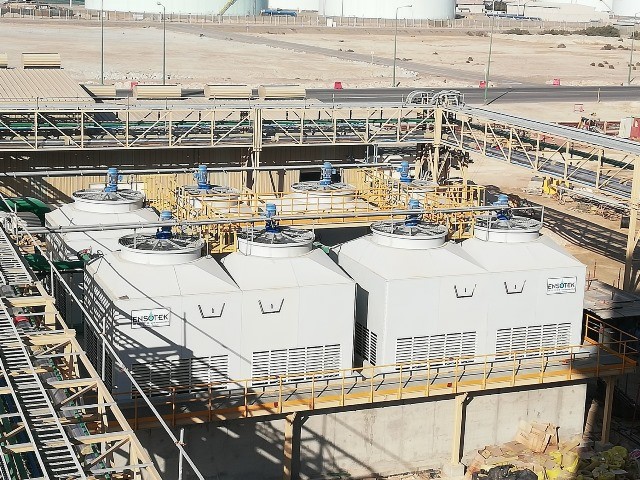
This is especially important for installations in open industrial areas.
Cooling towers generate a certain level of noise due to the fan operation. Therefore, environmental impact should also be considered during placement.
Important factors include:
Towers should be located away from offices, residential areas, and social spaces
If necessary, sound insulation or low-noise fan systems should be used
Compliance with local noise regulations should be verified
Cooling towers require regular maintenance. Therefore, easy service access must be planned when selecting the installation location.
Necessary access areas include:
Fan and motor maintenance space
Access for cleaning the fill material
Pump and piping inspection areas
Space for lifting equipment or cranes if needed
Installing towers in tight spaces can significantly increase maintenance costs.
Choosing the correct location for a cooling tower:
improves system efficiency
reduces energy consumption
lowers maintenance costs
extends equipment lifespan
For this reason, airflow, wind direction, maintenance access, noise impact, and structural suitability should all be evaluated during the design phase.
A properly designed and correctly positioned cooling tower provides significant long-term operational benefits.