Why Wet-Bulb Temperature Is Important in Cooling Tower Selection
Industrial cooling towers are widely used in HVAC systems, power plants, and manufacturing facilities to remove heat from circulating water. These systems operate based on the principle of evaporative cooling, where a portion of the water evaporates and carries heat away.
One of the most critical environmental parameters affecting this process is the wet-bulb temperature. When performing a cooling tower selection, engineers must consider the local design wet-bulb temperature because it determines the theoretical limit to which water can be cooled.
For this reason, the cooling tower wet bulb temperature plays a key role in cooling tower sizing, thermal performance, and overall system efficiency.
Wet-bulb temperature is the lowest temperature that can be achieved through evaporative cooling under current atmospheric conditions. It depends on both:
Dry bulb temperature (ambient air temperature)
Relative humidity of the air
When water evaporates into the air stream, it absorbs latent heat from the remaining water. As a result, the water temperature drops until it approaches the wet-bulb temperature of the surrounding air.
In practice, a cooling tower cannot cool water exactly to the wet-bulb temperature, but it can approach it depending on tower design and operating conditions.
The thermal performance of a cooling tower is typically described using three key parameters.
The cooling tower range represents the temperature difference between the hot water entering the tower and the cold water leaving the tower.
Range = T_hot − T_cold
Range indicates how much heat is removed from the circulating water.
The cooling tower approach value is the difference between the cold water temperature and the wet-bulb temperature.
Approach = T_cold − T_wet bulb
A smaller approach value generally indicates better cooling tower performance. However, achieving a very small approach requires a larger tower, increased airflow, and more heat-transfer surface.
The term cooling tower delta T is often used to describe the temperature drop across the tower, which is essentially the same as the range.
Delta-T directly reflects the heat rejection capacity of the cooling tower.
The achievable cold water temperature depends strongly on the wet-bulb temperature of the ambient air.
For example:
Wet-bulb temperature: 25°C
Cold water temperature: 30°C
In this case:
Approach = 5°C
If the wet-bulb temperature is higher, the cooling tower will not be able to cool the water to the same level.
A smaller approach requires:
more heat-transfer fill area
higher airflow rate
larger fan capacity
Therefore, the design wet-bulb temperature has a direct effect on the size and cost of the cooling tower.
If the cooling tower is selected based on incorrect wet-bulb data, the system may experience:
higher fan energy consumption
increased pump power
reduced cooling efficiency
Accurate cooling tower performance analysis is essential to ensure optimal system operation.
Wet-bulb temperature varies depending on geographic location and climate conditions.
Humid climates typically have higher wet-bulb temperatures.
Dry climates allow more efficient evaporative cooling.
Therefore, cooling tower selection must consider local meteorological data and psychrometric conditions.
The operation of cooling towers can be analyzed using thermodynamic and psychrometric calculations.
Inside the tower:
air absorbs moisture from evaporating water
the humidity ratio increases
the air enthalpy rises
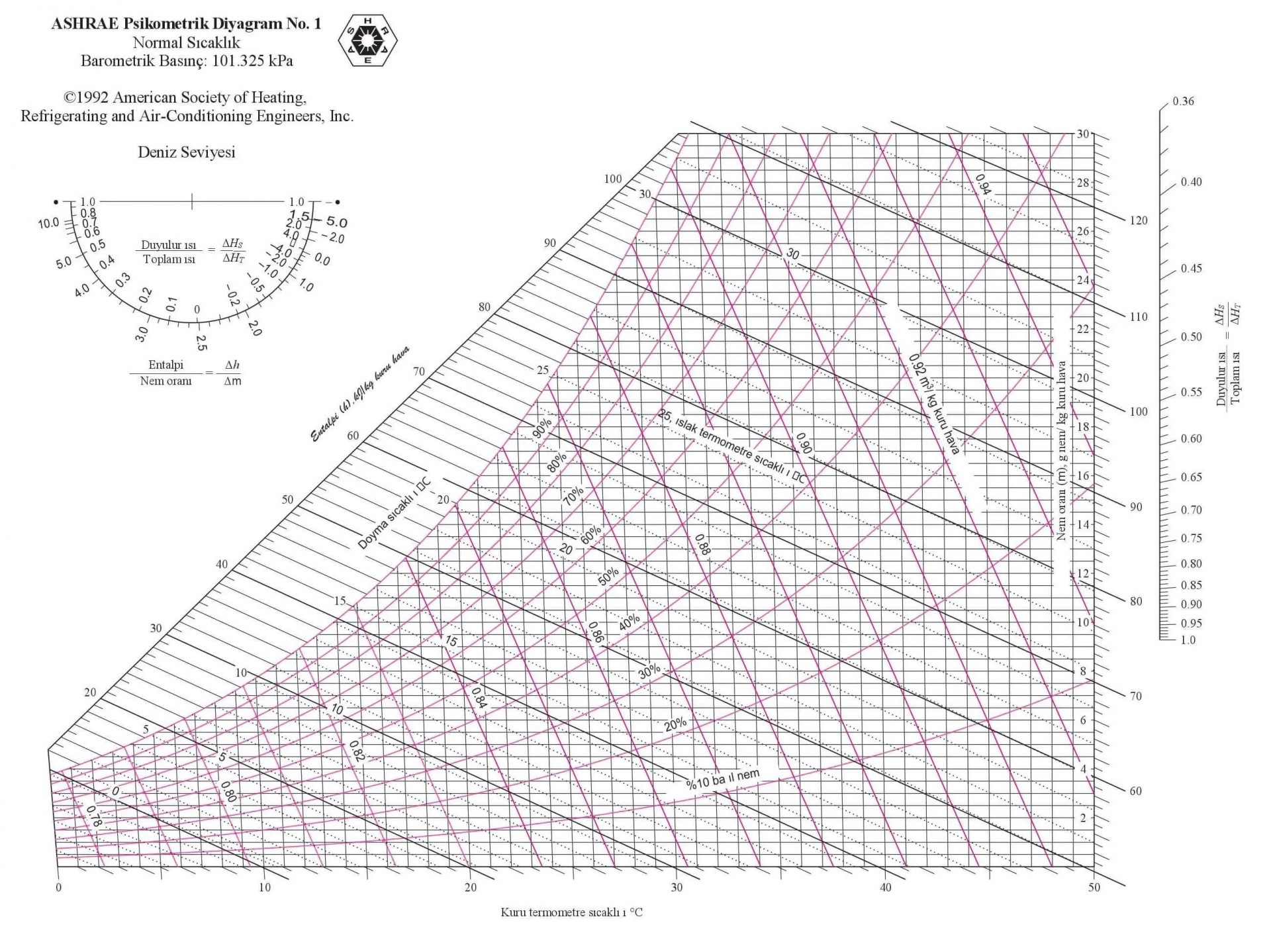
On a psychrometric chart, the air state moves toward the saturation line as evaporation occurs.
These cooling tower psychrometric calculations help engineers determine airflow requirements, tower efficiency, and overall cooling capacity.
The wet-bulb temperature is one of the most critical parameters in cooling tower selection and design. Since evaporative cooling systems can only reduce water temperature close to the wet-bulb temperature, accurate wet-bulb data is essential for proper system sizing.
Considering the cooling tower wet bulb temperature, approach value, delta-T, and range during design ensures:
optimal cooling tower performance
improved energy efficiency
reliable process cooling
lower operating costs
For industrial facilities, proper cooling tower thermodynamic analysis and psychrometric evaluation are key to achieving efficient and reliable cooling system operation.